
This isn’t some kind of protest against Big Coffee, and it’s not even specific to Starbucks as a company. This post is about how the way you get your coffee can be costing you too much money. It’s much more cost-effective to make coffee at home.
Yeah yeah yeah, we’ve heard it all before. Make your own coffee; one can of Folgers can cost the same as a coffee shop’s specialty. And of course that’s true, but that’s not the whole picture, and it’s definitely not enough reason to change course for people who want their espresso to be made a certain way every time. Let’s get into all the reasons why going out to get your caffeine fix is costing you time, money, and opportunities.
This article contains affiliate links as part of the Amazon Associates program. It doesn’t cost you anything to click them, but I’d potentially get commission for anything you buy using those links.
The Price of Your Favorite Drink
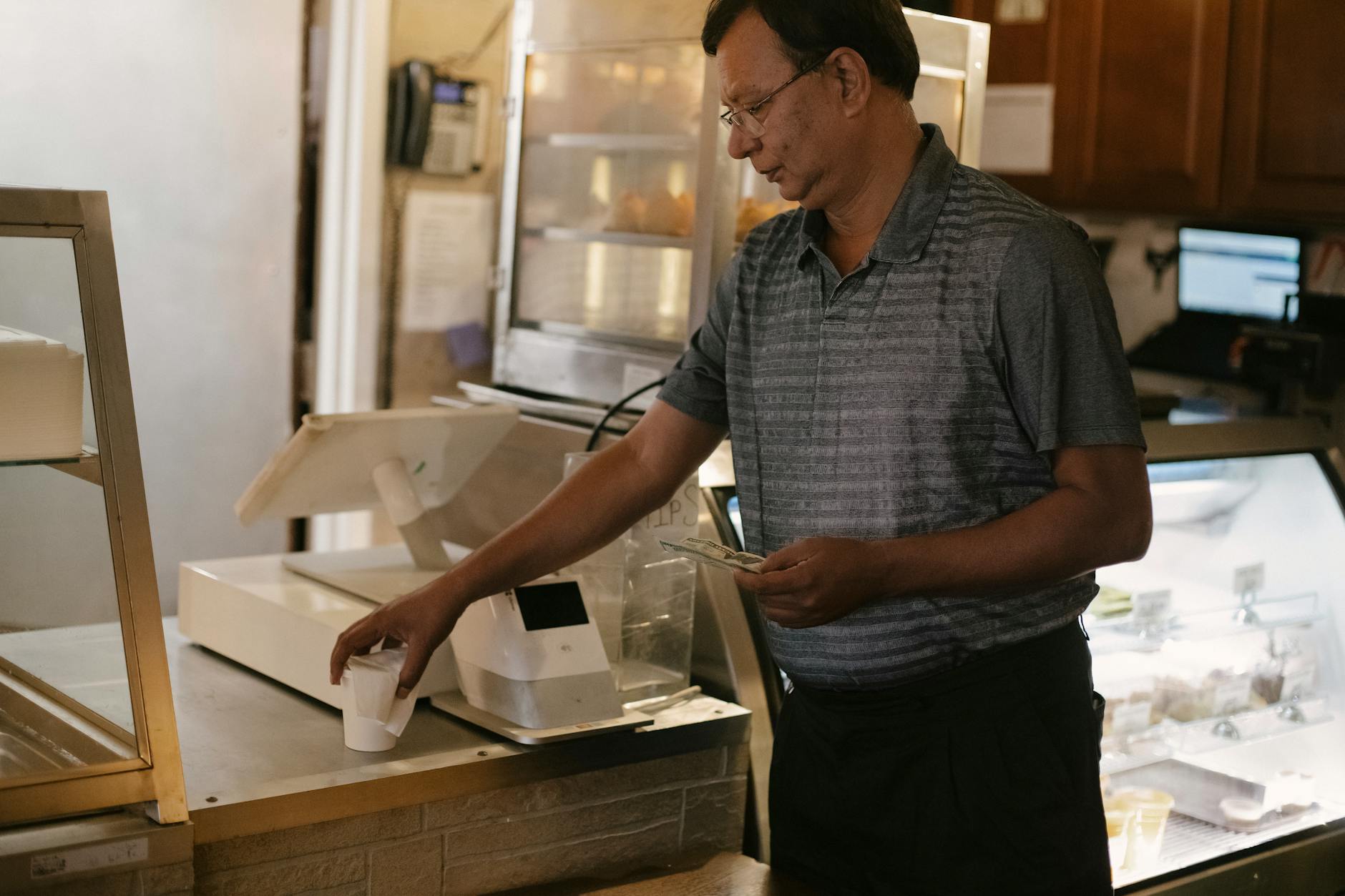
First thing’s first, you’re going to pay more for your caffeinated beverage if you have someone else make it for you (that really shouldn’t shock anyone).
Buying one regular coffee out doesn’t seem like it’ll impact your long-term finances, but when you consider the impact it has when you do so regularly, it becomes a much more intimidating expense. Let’s say you get a 12oz black coffee from Starbucks, and at the time I’m writing this, that costs $2.65 pre-tax at my local Starbucks. $2.65 doesn’t sound so bad right?
Now consider its impact on your finances when you get that cup of coffee regularly. Let’s say you need that cup of coffee every weekday before work, so you buy it 5 times a week totaling $13.25. Still not too bad, right? Now consider the impact if you continue that pace all year. Multiply that cost by 52 weeks in the year, and you’ve spent $689 (pre-tax!). That’s a lot of money for a small, basic cup of coffee every weekday morning. If you up that caffeine dose to every day, you’re spending $967.25 per year. WOW.
| Scenario | Cost per Cup | Number of Cups | Total Pre-Tax Cost |
| 12oz Coffee Every Weekday | $2.65 | 5 | $13.25 |
| 12oz Coffee Every Weekday for a Year | $2.65 | 260 | $689.00 |
| 12oz Coffee Every Day for a Year | $2.65 | 365 | $967.25 |
I’m only using Starbucks basic coffee as an example to make a more fair comparison to brewing your own coffee at home. The typical Starbucks customer is not just getting one small cup of black coffee. They’re likely ordering a bigger, more complex drink that would more than double the cost, giving this calculation much more staggering totals. Bump the size up to 16oz and make it a white mocha instead of regular coffee, and you’re already at $5.95 pre-tax at the time of writing this. Even that drink is tame for some of Starbucks’ most devoted customers.
But as I’ve mentioned, this is not the only cost of going out for coffee every day.
The Gas You’re Using to Get It
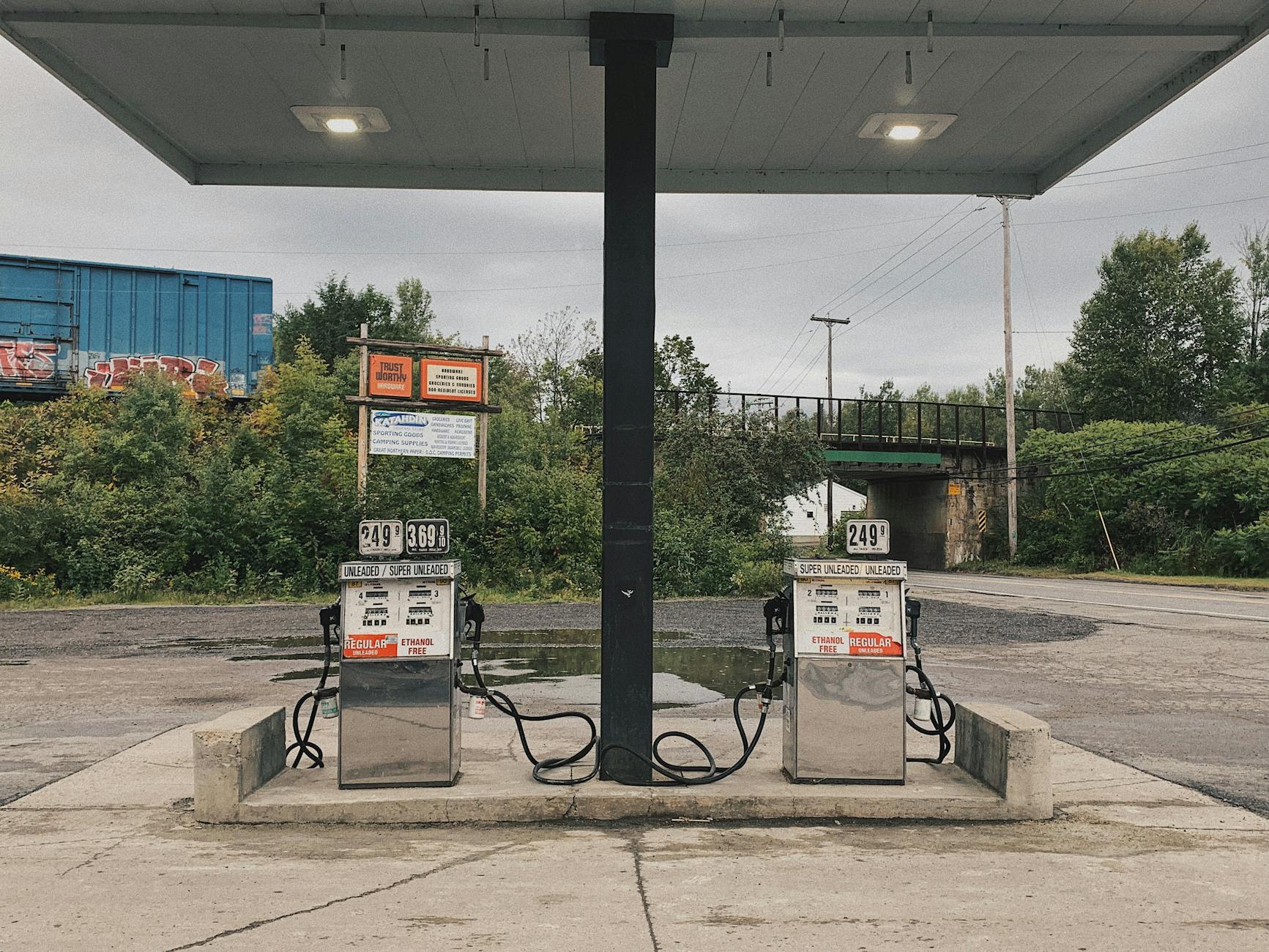
I’m not going to calculate how much gas is costing you to drive to and from Starbucks, but I will tell you that it adds to the already high cost laid out above. I guess if you’re walking or biking, you can skip this section, but if you drive or hitch a ride, your coffee is getting more expensive.
Let’s assume you’re driving. Whether your car uses gas, diesel, or your home’s electricity, it costs you money to fuel up. Whatever amount of fuel you’re using to drive to and from the coffee shop also factors into how much you’re spending for that caffeine fix.
The Time You’re Spending

Money isn’t the only thing you spend when you go to a store. You’re spending your most precious, limited resource: time.
If your Starbucks is a 10 minute drive from home, that’s 20 minutes of windshield time that you aren’t getting back. Traffic makes those values worse, and no one loves the added stress of bad drivers.
Then factor in how long it takes to get to the front of the line to order your drink, maybe 5 minutes. Now the baristas need to make your drink. Depending on how complex your drink of choice is, you might be tacking on another couple minutes, let’s say 5 minutes. That’s 10 minutes to drive there, 10 minutes in Starbucks, and 10 minutes home without traffic. 30 minutes of your life that you won’t get back, when you could have made a cup of coffee at home and saved yourself the time and stress of all of it.
Opportunity Cost

What could you have bought or gotten done if you hadn’t gone to Starbucks so many times this month? That question should be just as front-of-mind as the cost of the drinks you’re buying, and it really continues the time-saving conversation.
If you got another half-hour back every day, you could do something much more valuable with your time than staring at tail lights. You could do the dishes so you don’t need to worry about them later. You could throw something in the crockpot and save yourself the hassle of cooking dinner later. If it’s a work day and you work from home, you could be that much more productive. You could even just do something to help your mental health, like read a book for pleasure.
The money you aren’t spending on that coffee run can also be redirected to something else. You could pay down student loans, make a bigger car payment, contributing to your savings or investments, increase your monthly grocery budget, or even add a subscription service like Amazon Prime or YouTubeTV.
Whatever you could do with that extra time and money is something you’re giving up by going out of the comfort of your home to get coffee.
So, What’s the Alternative
There’s obviously the up-front cost of buying the actual coffee maker to consider. You can budget out how much money you’d save by considering all the factors I’ve already mentioned and determining what coffee maker makes sense to not eat up all that savings, but at the end of the day you will DEFINITELY save by making coffee at home. Whether you’re shelling out a couple hundred bucks to buy the fanciest of the fancy makers, or you’re taking it slow with the cheapest one you could find at Target, it will pay for itself.
It’s not a stretch to say that unless you’re buying premium products, your morning coffee will cost you less than $1. Depending on your method, it can be much less than that. This can of Folgers breaks down to less than $0.25 per cup based on costing $23.50 at the time I viewed it ($23.50 divided by 105 cups that can be made at the recommended strength for 12oz).
Let’s explore the options for coffee makers.
K Cups (and other pods)
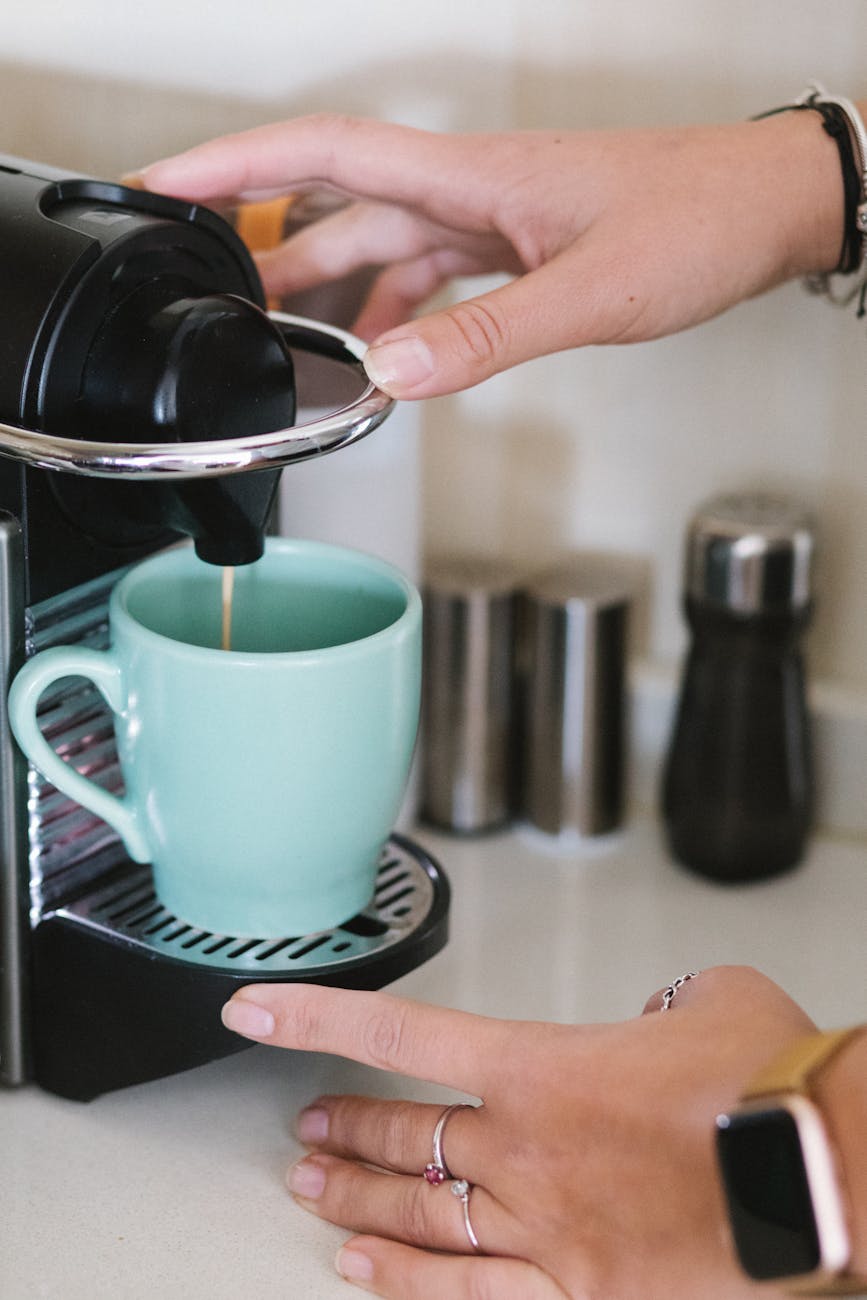
From a cost/benefit perspective, I don’t love the idea of buying a single-serve pod-based coffee maker. But if it’s either K Cups or going out to get a coffee every morning, it’s definitely a better option.
Keurig is the big name, but all of the brands have jumped into that market. If you price out the cost per drink, you’re probably looking at something around 50 cents per drink, give or take based on what brand/style of pod you prefer (I always got the giant packs of Kirkland pods from Costco when I relied more heavily on my Keurig, and they were easily the most cost-effective).
I don’t use mine as often as my newer coffee maker (stay tuned), but I do recommend this Keurig to anyone who is convinced that K Cups are the way to go. I still have mine, and it can be very reliable as long as you remember to give it some TLC (just run a bunch of vinegar through it every once in a while to clean out the system). It has a water tank on the side so you don’t have to put water in every time before you brew.
Make Coffee at Home From Grounds
This is my personal favorite for making coffee at home. To get started, you don’t have to spend much at all. You can get a basic coffee maker like this, and buy some grounds like the Folgers ones I referenced above. It’s a relatively low start-up cost, and the savings over time will be very worth it. If you like having frothed milk in the milks you get at the coffee shop, you can froth your own milk at home using a frother like this that can be found on Amazon.
I really enjoy making coffee and tea at home, both hot and cold brews. That’s why I highly recommend this Ninja coffee maker that I’ve been using for a long time. It even has a frother built into the side so you don’t need to buy it separately.
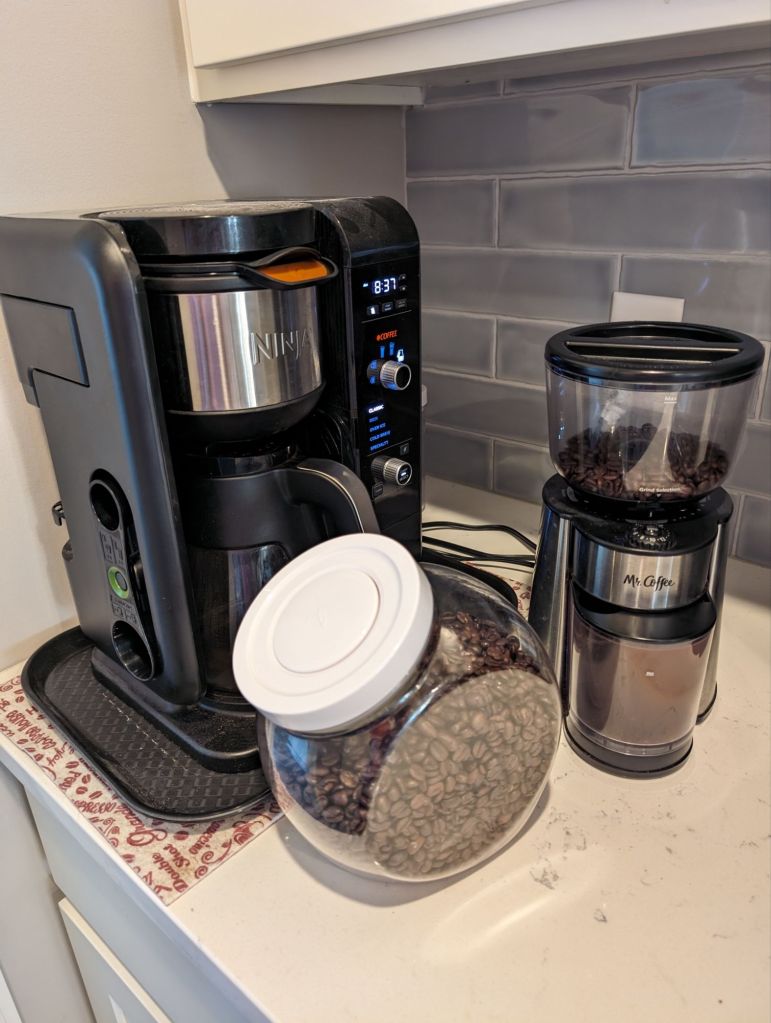
We also enjoy buying whole beans and grinding them ourselves at home. Our go-to is Caribou medium roast, which we’re able to find at our local Costco. We use this Mr. Coffee burr grinder to grind them into medium coarseness for hot coffee, we make coarse grounds for cold brew coffee. Ours is the old version (since we’ve been doing this for a while now), so here’s the new version.
Our setup costs more than others, but it keeps us interested in staying home for coffee, and it’s lasted long enough to easily be worth the start-up cost.
Espresso at Home
I can’t speak from experience on this one, but even with the higher start-up cost for an espresso machine, the overall savings will still be there. Getting something like this is on my bucket list, but at this time I can’t justify spending the money when we’re so content with what we have, and I don’t know the first thing about how to make a quality shot of espresso.
Espresso drinks cost more than drip coffee in most cases, so it makes sense to pay more for the equipment to make it yourself. If Espresso is more of your style, consider researching how to make your own and what machines will help you do so. If nothing else, it seems like a Nespresso machine and pod system is a good entry-level solution.
I’m not saying you should feel bad about splurging on a cappuccino every once in a while, but making too much of a habit out of it can have serious impacts on your bank account and take away other opportunities to use your time wisely.
Check out our other blog posts, and subscribe to get more blog posts right to your inbox! And don’t forget to follow us on Instagram!

 Fatherhood & Finances
Leave a comment